 GOBLIXO
The unlock countdown
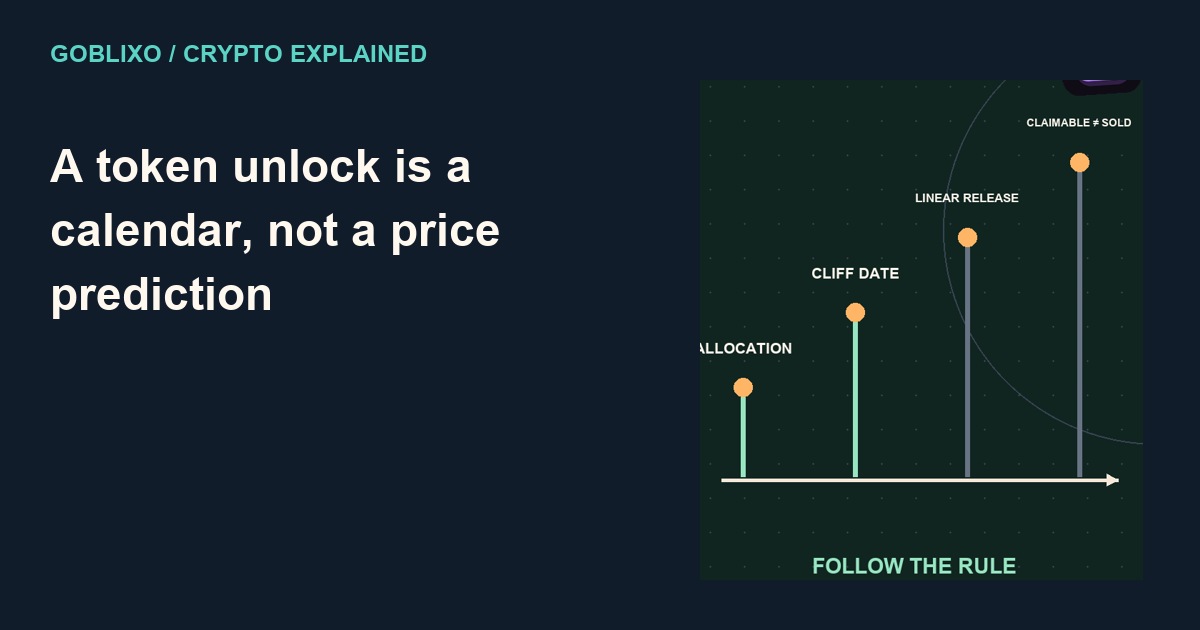
A token unlock countdown reaches zero. Does every unlocked token immediately get sold? No. The countdown describes an availability rule. It does not read the future intentions of every holder.
Allocation is not circulation
A token allocation can be subject to a vesting schedule. That schedule determines when a beneficiary can access tokens under the agreement or contract. Allocation and current circulating supply are different ideas.
What a cliff does
A cliff creates an initial period before release becomes available. In one illustrative schedule, nothing can be claimed for several months, then a specified portion becomes claimable.
What linear vesting does
Linear vesting makes entitlement accumulate over time under a defined formula. A contract can combine timing rules, but different implementations handle cliffs, catch up amounts and release dates differently.
Unlocked is not sold
Claimable tokens do not necessarily enter an exchange order book at once. A holder might claim later, retain them or transfer them elsewhere. Unlock data is one input, not a guaranteed price direction.
Read the contract rules
Check total allocation, already released amounts, beneficiary, start, duration and any modification or revocation powers. A promotional chart should match the actual rules rather than substitute for them.
A careful way to use this explanation
OpenZeppelin VestingWallet is one implementation, not a definition of all token allocations. Assets transferred to an already started vesting wallet can be partly releasable immediately under its schedule. Contract ownership and release behavior also need review. This article does not forecast a token price or assess a project’s disclosures. Use a specific contract and the project’s current allocation documentation to reconcile a real unlock.