 GOBLIXO
Audited. what was checked?
A crypto website says audited. Before treating that word as a safety switch, ask a smaller question: what code was reviewed, by whom, and what happened to the findings?
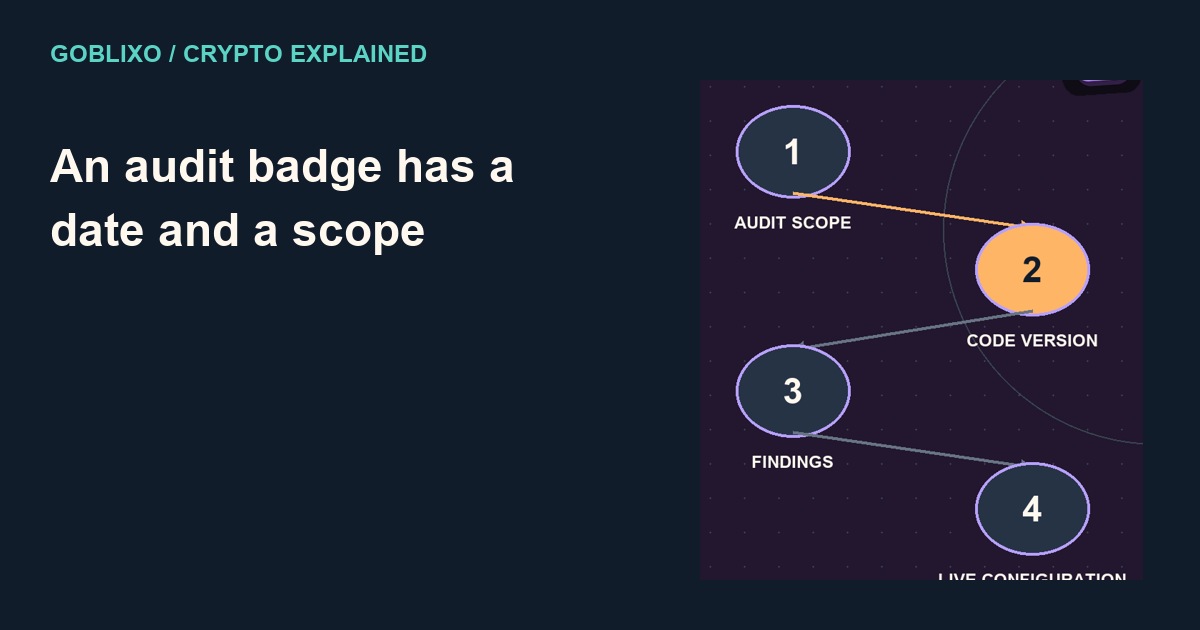
A review has a scope
A security audit examines a defined scope under stated assumptions. It may cover selected contracts and a particular code revision. It is not automatically a review of every website, operator or later feature.
Version matters
Check the report’s date, commit or version, and the deployed system it relates to. A genuine report about old code is still a genuine report, but it does not establish that new code was examined.
Read the findings
Read findings and their resolution status. Fixed, acknowledged and unresolved are different outcomes. A list of severity labels is less useful without understanding what the issue could affect.
Check what changed
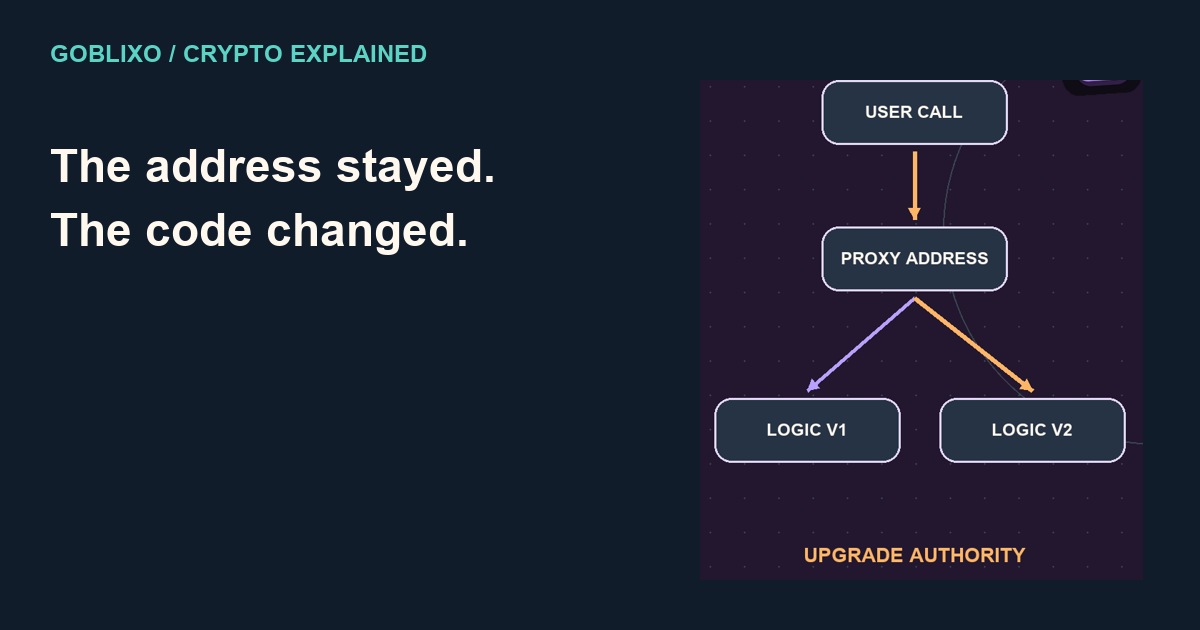
Upgrades, configuration changes and connected services can introduce different risks after the review. Compare the current implementation and privileged roles with the report’s assumptions.
No zero risk badge
An audit can reduce uncertainty without eliminating bugs or guaranteeing funds. Use it as evidence to investigate, alongside design and operational controls. Do not turn a logo into permission to stop asking questions.
A careful way to use this explanation
This guide does not assess a specific auditor or protocol. A report may contain exclusions, limited review time and assumptions about external components. Confirm that the report is actually published by the named auditor and that the project has not merely copied a logo. An absence of critical findings is not evidence that every potential failure was ruled out. Configuration and upgrade authority deserve separate checks.