 GOBLIXO
Where is the picture?
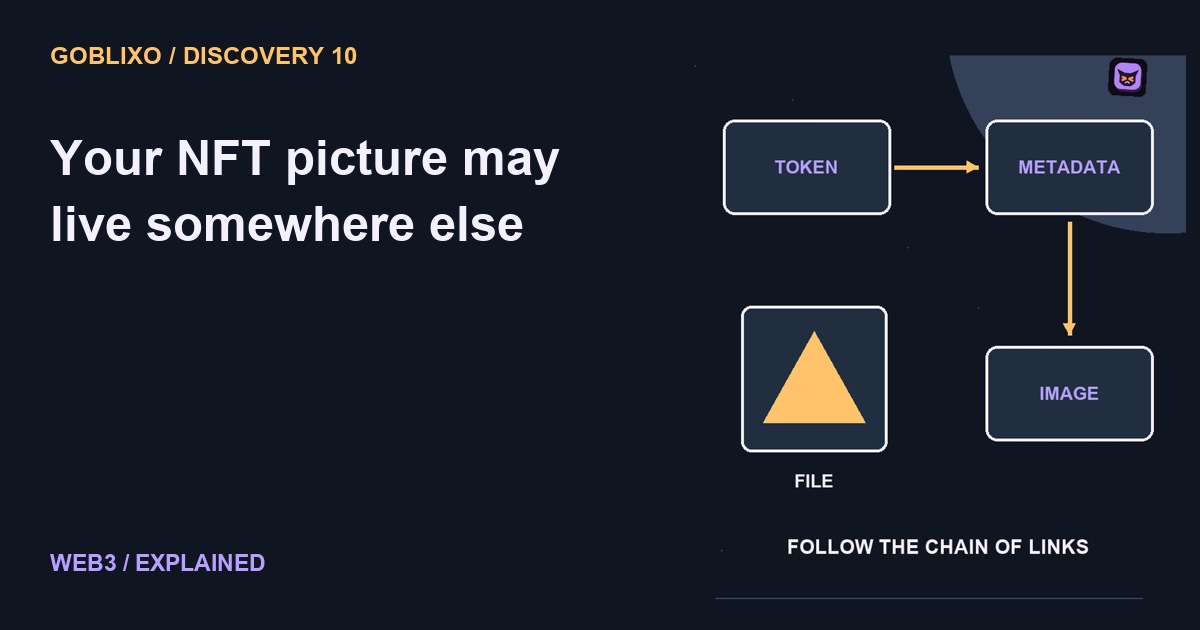
You own an NFT, so the picture must be stored forever inside the blockchain. Right? Not necessarily. The token, its descriptive metadata, and the media file can live in different places.
Token is not always the image
The ERC seven twenty one standard includes an optional metadata extension. A token can expose a URI that leads to descriptive data. That data may then point to an image stored elsewhere.
Follow the metadata
Follow the chain of references: contract, token identifier, metadata location, image location. A permanent token record does not automatically make every external server or file permanent.
A content addressed file
IPFS uses content addressing. A content identifier points to particular content, rather than merely naming a server location. Change the content, and its identifier changes. That helps distinguish one version from another.
Available is another question
But identifying content is not the same as keeping it available forever. Someone still needs to retain and serve the data. IPFS pinning is one way to preserve content on a node.
Ask what can change
Before believing permanent artwork claims, ask where the metadata and image live, who maintains availability, and whether the contract can change its references. Some projects use other designs, including on chain artwork.
Try the idea carefully
A token URI may use a web URL, an IPFS URI, or another supported scheme. The scheme alone does not establish who can update contract state or metadata pointers. Inspect the specific project documentation and contract design. This article does not value an NFT, establish copyright ownership, or guarantee storage durability. A marketplace thumbnail is a display convenience, not a complete storage audit.