 GOBLIXO
No new trade. new risk.
You borrow against crypto, close the app, and make no new trade. Your position can still move closer to liquidation. The contract is tracking values and debt, not whether you touched a button.
Collateral and debt
Aave expresses part of that relationship through a health factor. In a simplified single collateral example, take collateral value, multiply by its liquidation threshold, and divide by debt value.
A threshold has a job
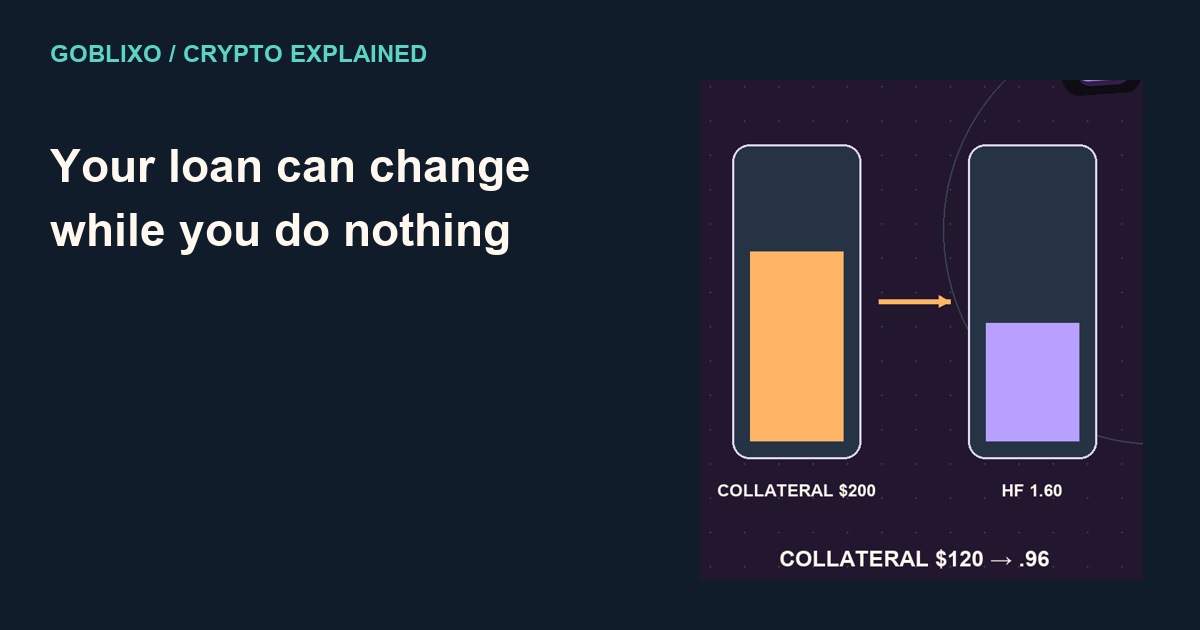
Invented numbers: two hundred dollars of collateral, an eighty percent liquidation threshold, and one hundred dollars of debt. The health factor is one point six. This is arithmetic, not a safe borrowing recommendation.
Prices move the ratio
Now the collateral value falls to one hundred twenty dollars while debt stays at one hundred. The same calculation gives zero point nine six. You did nothing, but the ratio changed.
One is a boundary
In Aave, a health factor below one can make a position eligible for liquidation. Parameters, debt interest and oracle prices matter. The app’s displayed number is not a permanent shield.
Liquidation is not a reminder
Liquidation can mean collateral is taken under the protocol’s rules to repay debt, including a liquidation incentive. It is not merely an email reminding you to top up later.
A careful way to use this explanation
This example isolates one changing price and ignores interest accrual and multiple collateral assets. It is not a suggested position, margin of safety or prediction of liquidation timing. Current market parameters, oracle updates and protocol version affect the actual process. Inspect the relevant deployment and its current documentation. Monitoring a position does not eliminate sudden price changes or execution risk.