 GOBLIXO
Who checks the block?
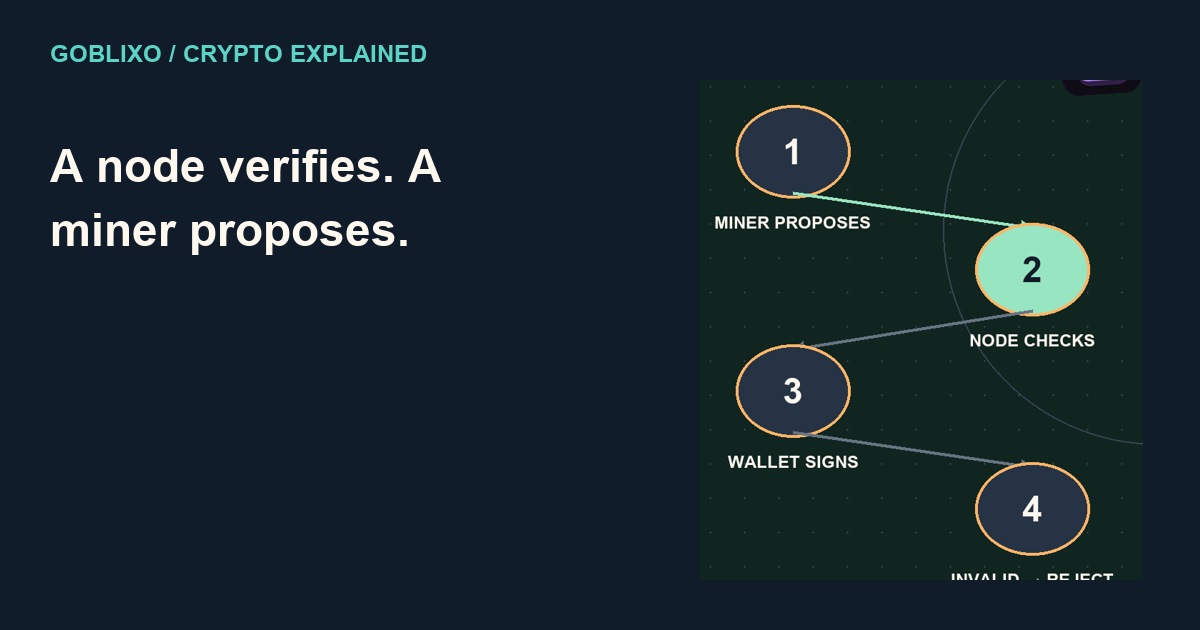
Who decides whether a Bitcoin block is valid? Saying the miners do everything skips an important role. A full node checks blocks against the rules it enforces, including blocks proposed by miners.
Miners propose candidates
Miners assemble candidate blocks and compete through proof of work. Their work helps determine the chain, but a large amount of work does not make an invalid transaction valid.
Nodes apply their rules
A validating full node independently checks relevant consensus rules. If a candidate breaks those rules, that node rejects it. The node does not need to accept a miner’s promise that the numbers add up.
Work is not a free pass
This is why mining and validation are different jobs. A node can validate without operating mining hardware. The everyday word computer hides very different responsibilities in the system.
A wallet is an interface
A wallet is another role: it helps manage keys, construct transactions and show information. Some wallets connect to your own node, while others rely on external servers for network information.
Independent checks have costs
Running a node has storage, bandwidth and maintenance requirements. It is not a guaranteed income stream. Understand those requirements before treating a download button as a new way to earn.
A careful way to use this explanation
A full node validates the blockchain rules implemented by its software; agreement across a network also depends on compatible rules and chain selection. This diagram does not claim one actor alone controls Bitcoin. Pruning can reduce retained block storage but does not turn validation into mining. Hardware and bandwidth requirements change, so check the current official documentation before installing software. No mining returns or node rewards are promised.