 GOBLIXO
The voice sounds right
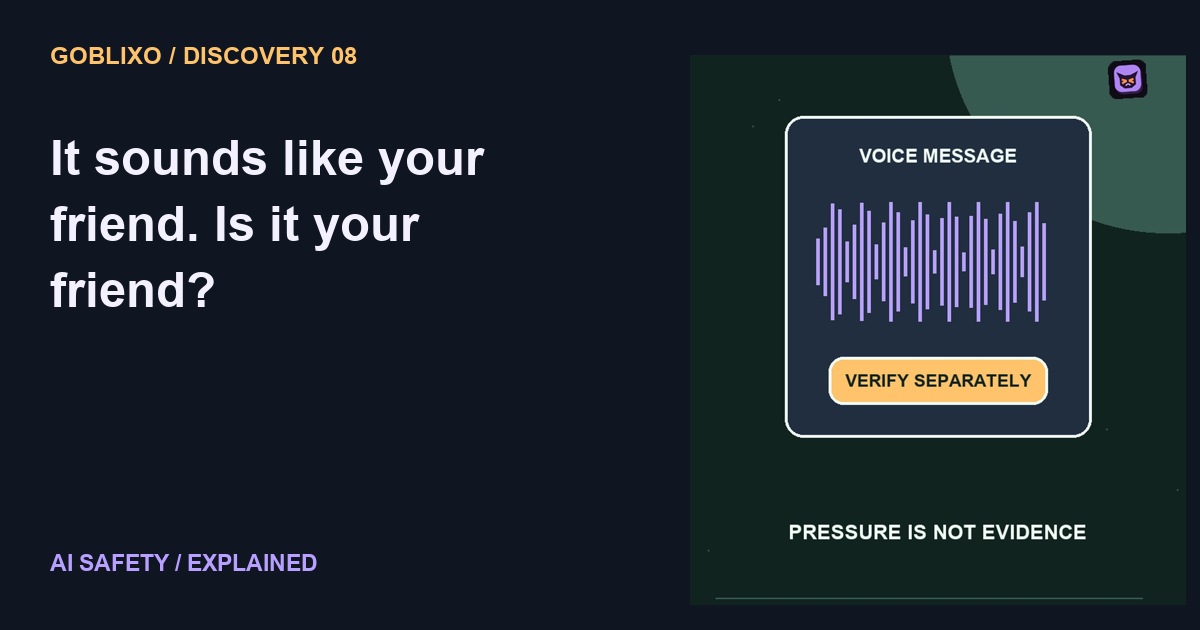
A voice message sounds exactly like someone you know. They need money immediately and say there is no time to call. The voice feels like proof. That is precisely the problem.
Sound is not identity
AI tools can imitate a person's voice. Official scam warnings describe criminals using familiar sounding audio to support an invented emergency. A recognizable sound does not independently establish who sent the request.
Urgency is part of the story
Pressure makes the story harder to question. A deadline, secrecy, or a demand to use a particular payment method can keep you moving inside the caller's version of events.
Leave the incoming channel
The useful move is to verify through a channel you already trust. Call the person using a number you had before the message, rather than a new number supplied inside the suspicious conversation.
Verify the request
Confirm the actual request as well as the identity. A real account can be compromised. Keep the check separate, and avoid sending money or private information while the story remains unverified.
Do not bet on a glitch
Do not rely on finding a robotic pause or strange pronunciation. Audio quality varies, and an imitation can sound convincing. Verification should not depend on winning a listening contest against a generated voice.
Try the idea carefully
Prepare a verification route before an urgent message arrives. Keep contact information current and discuss how your household or team verifies unexpected requests. Do not publish private verification details. If money or credentials were already sent, contact the relevant service through its genuine support route promptly; available recovery and reporting steps depend on the circumstances. This checklist cannot authenticate a particular recording.