 GOBLIXO
The link looks official
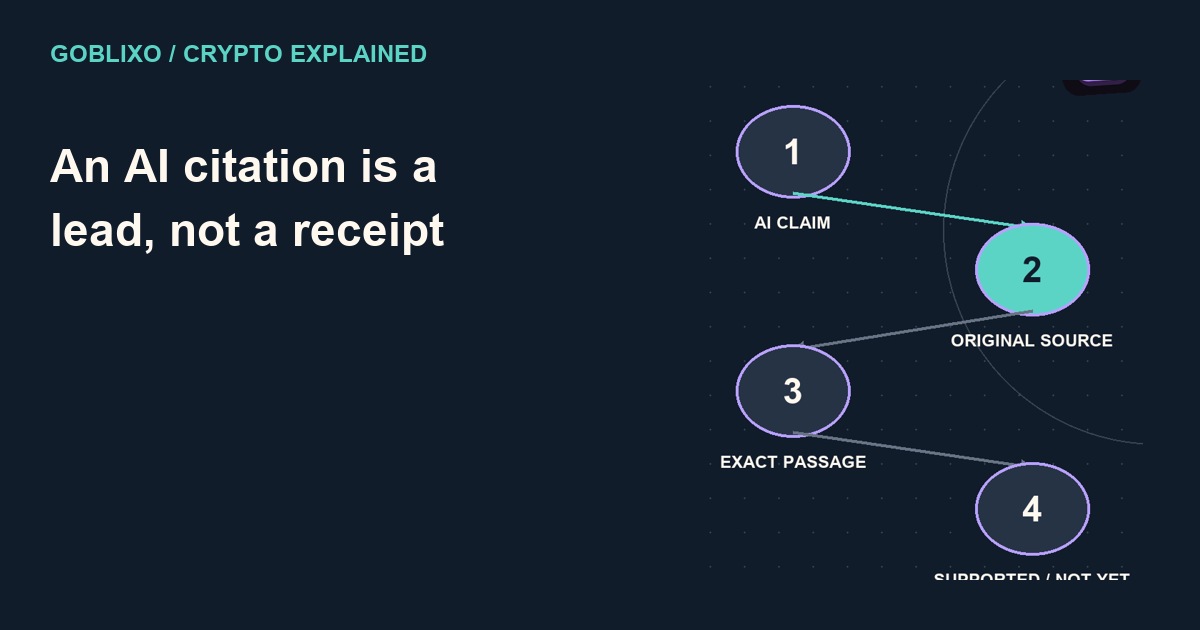
An AI gives you a confident answer about a wallet, with a neat list of sources. That list looks reassuring. But did those sources actually support the answer? Here is the check.
Open the original
Open the original document through the genuine publisher. An impressive title is not enough. AI systems can produce incorrect references or connect a real source to a claim it never made.
Find the claim
Find the exact feature or statement being asserted. Does the source describe that wallet, network, version and action? A general blockchain explainer cannot confirm a specific provider’s current withdrawal procedure.
Check date and network
Check the date and scope. A page about a previous version may explain history while missing today’s rules. Location eligibility and supported networks can change independently.
Separate fact from guess
Separate documented facts from inference. If the answer says therefore this is safe, ask which evidence supports that conclusion. A product description does not establish the safety of your particular account.
Compare the limits
For important actions, compare current official instructions and the actual interface before proceeding. Never paste recovery words into an AI chat to make the answer more personalized.
A careful way to use this explanation
Fictional example: an answer says a wallet supports withdrawals on network Z, but links to a generic description of that network. The link may be real while the support claim remains unverified. Mark that claim as not established until the wallet’s current documentation confirms it. This checklist does not guarantee that an answer is correct; it makes unresolved assumptions visible before an action. Keep private account and recovery information out of research tools.