 GOBLIXO
Encrypted. still a scam?
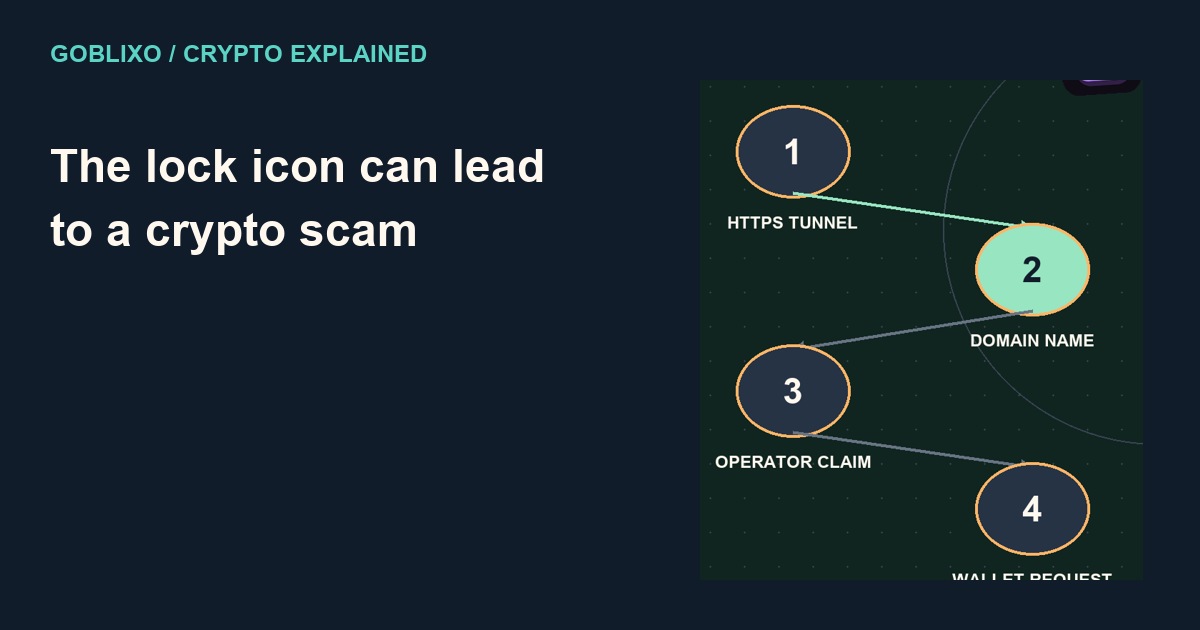
A crypto claim page opens with a secure connection indicator. Does that mean the offer is genuine? No. Encryption can protect the connection to a website that is still trying to deceive you.
Protect the connection
HTTPS uses transport security between your browser and the site. That helps protect data in transit. It does not certify the truth of a promotion or the honesty of the operator.
The domain still matters
The certificate relates to a domain. The question is whether that domain is the one you intended. A convincing page design does not fix a different name in the address bar.
Lookalike names exist
Lookalike names, extra words and misleading subdomains can all create confusion. Read the actual domain carefully rather than relying on a search advert, logo or a screenshot of someone else’s browser.
Check the request
Then inspect the action. A site asking for recovery words is a different request from reading a public guide. A signature or approval deserves its own review even on a familiar domain.
Use your known route
Use a previously verified official route and compare with the service’s current documentation. Do not bypass browser security warnings. A green looking page is not a reason to rush.
A careful way to use this explanation
Browser indicators and labels change over time, so focus on the underlying distinction rather than the color of an icon. This article does not ask you to open a suspicious link or test a real seed phrase. A legitimate site can also be compromised, and an accurate domain check does not replace reading a transaction. If a request is unexpected, leave the incoming route and independently verify it.